Video Game Review: Mission US – For Crown or Colony?

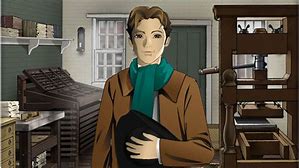
I am hoping in the future to teach History and/or U.S. Government at my monastery’s high school, Cleveland Benedictine, so online games that teach students about those subjects are of great interest to me.  I decided to explore in greater depth the games of Mission US and found the game “For Crown or Colony?” to have many worthwhile attributes.  The game is advertised as appropriate for middle school and high school students.  I will admit upfront that being fun to play is not one of this game’s more prominent features.  There is nothing to shoot at, nor are there humorous names, jokes, or amusing sounds.  However, the animation is of high quality, and the player has many opportunities to earn awards, to complete tasks, and to make decisions about where his character will go, what he will do, and whom he will see.  The game is a series of quests that eventually involve the character in a major American historical turning point, the Boston Massacre, and the events that led up to that calamity.

Mission US

https://cdn.mission-us.org/assets/tagline.png

One of the best things about this game is its learning content, familiarizing students with colonial American terminology.  “For Crown or Colony?” gives the player the opportunity to click on terms with which he or she may not already be familiar, such as “pennywhistle,” “Townshend Acts,” “Redcoats,” and “Daughters of Liberty,” and a definition of the term is provided.  The player has choices for his or her character about how and when to complete tasks, and he or she may choose from menus about how to respond to other characters, such as Paul Revere, other Sons of Liberty, and those persons loyal to the English crown, while traversing through the streets, shops, and homes of colonial Boston, which are colorfully displayed.
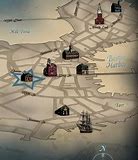
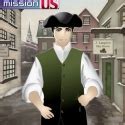
Image result for images mission us for crown or colony

A couple of possible drawbacks for this game are that it is not multi-player and that it may take an hour or two to complete.  However, the game has several parts or chapters that students may exit from and return to as time permits.  A student may complete one or two sections at one sitting and return later, or may decide to complete the entire game in one session.  This game may be especially appropriate for students who do not respond well to textbook and lecture explanations about the origins of the American Revolution, including learning disabled students, as well as enhancing learning from material encountered in those other formats.  This game is academically sound in my opinion and allows students to read about and make direct choices about how they and their character interpret the controversial issues that give rise to the American Revolution.

The game is easy to play with gradual learning through academic content offered throughout each game session.  Allowing students to guide the actions of an 18th century Bostonian through role playing is engaging, but a limitation is that only one character, a young printer’s apprentice named Nat Wheeler, is offered to players.  Some more choices among gender, ethnicity, and occupation of the primary character would help some students to connect more fully to the game experience by being better able to inhabit the character.  Nevertheless, all players can bring their own lived experiences, personal qualities, and cultural values to bear on the decisions they make for the character.  Though “For Crown or Colony?” does not permit much in the way of character design or customization, the actions he takes are determined to a large extent by the player as agent.  The game is well-ordered, allowing the player to pick up and return to differing situations as necessary but proceeding to an historical climax, the Boston Massacre.
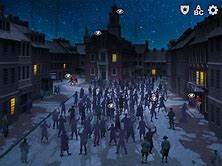

Image result for images mission us for crown or colony

I would recommend this game either as an enjoyable homework assignment for one or two nights, or within the classroom I would have students play separate chapters of the game on several consecutive days in 20-minute blocks of time as an enjoyable learning experience to augment other learning formats and methods.
Game Review 1: Nature Road Trip

Over the past week I have enjoyed exploring and playing several different games in a variety of different learning and subject areas.  What have struck me most are the differing levels of participation required by the learner and the amount of fun or enjoyment in playing each game.   A game that I enjoyed playing and that I believe meets many of the criteria for what games are meant to do for students is Nature Road Trip, which is found on the PBS KIDS website, https://pbskids.org/games.

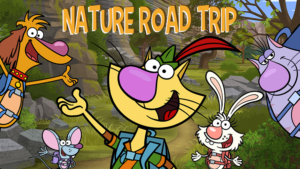
Game icon for Nature Road Trip.
Great Characters!

Nature Road Trip is a game about geography and science, focusing on several United States national park sites.  The game is appropriate for elementary school children, and from one to five children may play at a time.  The students pick a character and then direct that character around a board to different national park sites, collecting rewards and adding to or subtracting from a running cash balance.  The board is somewhat similar to the one experienced in the Milton Bradley board game “Life.”  One of the most fun parts of the game is shooting various objects within the park sites (geysers, fish, live bats, etc.) to earn points.  This part of the game is fast-paced and requires quick reflexes to earn points.  A narration instructs the students on the national parks and the importance or significance of the object they are shooting to collect points.  This narration connects the fun with the geographical learning objective.  I found this game to be both cool and fun with humorous characters, pleasing noises, and colorful graphics.  The game is simple for young children to play, and has the advantage of being multiplayer.  Though students play for points and reward emblems, there is limited competition between the children, as the point total and rewards board are a collaborative effort.  The only competition is to see which character makes it “home” first, as students direct their character around the board with a spinner and choice of directions at multiple junctions.  If the teacher wants to bring in some competition beyond this, he or she could have students or teams play each game consecutively and then compare their final point tallies.  However, within each separate game competition is not the most important goal, but collaborative geographical and scientific learning is.   One of the things I like about this game is that it introduces and defines words simply that the teacher may later build upon, such as geyser, volcano, lava, brine, etc.  The only negative of this game for me was its limited use of highlighted, spelled-out words.  The narration could have been paired with spelling of introduced words to create some word recognition in the students.  Overall, I believe that Nature Road Trip would be an easy, amusing, and enjoyable game for elementary school children to play and learn some basic geographical and scientific terminology.

My First Blog Post

Introductory Post

Hello! My name is Father Conrad (Tyllmann) Wald, OSB. Conrad is my religious name as a Benedictine monk of Saint Andrew Svorad Abbey, though Tyllmann is my given name. My hometown is Atlanta, Georgia, but I have lived in Cleveland, Ohio for the last ten years. I studied History and Political Science as an undergraduate at the University of Georgia, and then I earned a Masters in Political Science from The Ohio State University. I was ordained to the priesthood in May of 2019, after six years of Philosophy and Theology studies.

As a monk I am, of course, into praying and singing, but my other interests are foreign/independent movies, old TV sitcoms, horse racing, college football, Premier League soccer, and spending time with family and friends when I can. This semester I am hoping to move beyond my job as a study hall monitor at Benedictine High School to actually spend more time in the classroom with students. Being in my 50’s, I am used to traditional lecture-and-take-notes types of instruction in college classrooms. I do not mind working with others on projects and tasks, as long as I believe that the assignments are well-defined and that there are resources, including the instructor, for students to consult when difficulties arise. I love learning new things, but I have always been a bit slower reader and learner, as I tend to absorb everything and am not always able to detect what is most important in the material or assignment.

As my eventual goal is to teach at my abbey’s high school (Cleveland Benedictine), I am particularly interested in culturally relevant pedagogy because our school is rather diverse. An article I read last semester that is particularly appropriate to this concern is “Were There any Black People in Johnstown? An Investigation of Culturally Relevant Pedagogy in Service of Supporting Disciplinary Literacy Learning in History.” What appealed to me about this source was its investigation of how a teacher in an urban Pittsburgh middle school managed to make the 1889 Johnstown Flood a topic of great interest for his African-American students. (Kucan, L. & Cho, B.Y. [2018]. “Were there any Black people in Johnstown?” An investigation of culturally relevant pedagogy in service of supporting disciplinary literacy learning in history. Urban Education, doi: 0042085918804011).

A question for Dr. Shutkin would be: We allow our students to have their cell phones with them throughout the day, and most of them have iPhones. As each student also has a portable laptop computer, are the students likely to receive any additional educational benefit from having the phones with them? It seems the phones are not being used for educational purposes but only for texting, listening to music, and playing video games. The students seem to view the phones as a non-educational device, whereas the laptop computer is for their schoolwork.

Introduce Yourself (Example Post)

This is an example post, originally published as part of Blogging University. Enroll in one of our ten programs, and start your blog right.

You’re going to publish a post today. Don’t worry about how your blog looks. Don’t worry if you haven’t given it a name yet, or you’re feeling overwhelmed. Just click the “New Post” button, and tell us why you’re here.

Why do this?

  • Because it gives new readers context. What are you about? Why should they read your blog?
  • Because it will help you focus you own ideas about your blog and what you’d like to do with it.

The post can be short or long, a personal intro to your life or a bloggy mission statement, a manifesto for the future or a simple outline of your the types of things you hope to publish.

To help you get started, here are a few questions:

  • Why are you blogging publicly, rather than keeping a personal journal?
  • What topics do you think you’ll write about?
  • Who would you love to connect with via your blog?
  • If you blog successfully throughout the next year, what would you hope to have accomplished?

You’re not locked into any of this; one of the wonderful things about blogs is how they constantly evolve as we learn, grow, and interact with one another — but it’s good to know where and why you started, and articulating your goals may just give you a few other post ideas.

Can’t think how to get started? Just write the first thing that pops into your head. Anne Lamott, author of a book on writing we love, says that you need to give yourself permission to write a “crappy first draft”. Anne makes a great point — just start writing, and worry about editing it later.

When you’re ready to publish, give your post three to five tags that describe your blog’s focus — writing, photography, fiction, parenting, food, cars, movies, sports, whatever. These tags will help others who care about your topics find you in the Reader. Make sure one of the tags is “zerotohero,” so other new bloggers can find you, too.